A great meal can teach you more about a place than a museum ever will. The way a region grows, cures, ferments, and seasons its food is essentially a compressed history of its land, climate, and people. That's the premise behind a growing style of travel that puts cuisine at the center of the itinerary — not as a perk, but as the whole point.
Afar recently spotlighted this approach, highlighting food-centered tours that use market visits, cooking classes, tastings, and regional meals as a lens for understanding a destination. Per their coverage, three destinations stand out for travelers who want their appetite to do double duty as cultural education.
Tuscany, Italy: Cheese, Balsamic, and Chianti
Few places on earth have as much culinary identity packed into a single region as Tuscany. This isn't just about eating well — though you will — it's about understanding why specific ingredients are made the way they are, and who's still making them by hand.
Food-focused trips here typically include sampling artisanal cheese, aged balsamic, and Chianti wine. Each of those three things carries centuries of tradition behind it. Aged balsamic, for instance, isn't just vinegar — traditional production can take 12 to 25 years, with the liquid passed through a succession of barrels made from different woods. Tasting it alongside someone who makes it changes what you're tasting.
The same goes for Chianti. Drinking a glass in the vineyard where the grapes were grown, with someone who can walk you through the soil conditions and harvest decisions, is a fundamentally different experience from ordering it at a restaurant back home.
What makes these trips work: Small-group formats mean you're not shuffled through a tasting room with 40 strangers. You're often visiting producers directly — the kind of access that's difficult to arrange independently, especially if you don't speak Italian.
France: Eating Along the Rhône River
France is vast, and its food culture shifts dramatically by region. One of the most rewarding ways to experience that range is by cruising the Rhône River — a route that moves you through Lyon, Provence, and eventually Paris, each with a distinctly different culinary identity.
Lyon is widely regarded as one of France's great food cities, known for its bouchons — traditional restaurants serving rich, unfussy Lyonnaise cooking rooted in working-class history. Provence shifts the register entirely: olive oil instead of butter, herbs from the garrigue, fish-forward dishes shaped by proximity to the Mediterranean. Paris, meanwhile, layers the refined techniques of haute cuisine over a city that also runs on baguettes, market cheese, and neighborhood bistros.
A river cruise format threads these experiences together without requiring you to manage trains, hotel check-ins, and route logistics between each stop. You unpack once and move through regions as the itinerary unfolds.
Why Lyon specifically deserves your attention: The city's culinary reputation isn't hype. Its food culture is deeply tied to the mères lyonnaises — women who ran the city's restaurants and shaped its cooking traditions from the 19th century onward. Understanding that history while eating there adds real weight to what's on your plate.
Norway and Finland: Seafood Under the Northern Lights
This one requires a different kind of traveler — someone comfortable with cold, drawn to dramatic landscapes, and genuinely curious about Nordic food culture. The payoff is considerable.
Trips combining Norway and Finland let you experience fresh seafood in the context of the environments that produce it. Coastal Norway's fishing culture is ancient and ongoing; the cold, clean waters of the North Atlantic and Arctic shape everything about what gets caught and how it's prepared. Dining on fresh seafood in that setting — particularly in winter when the Northern Lights are visible — is a sensory experience that's almost impossible to replicate anywhere else.
Finnish food culture adds another dimension: a Nordic tradition built around foraged ingredients, lake fish, rye bread, and a deep relationship between people and the land. It's quieter food than you might expect, built for long winters and short summers, and it tells you something essential about how people have survived and thrived in genuinely demanding conditions.
Practical note: These trips are seasonal by nature. Northern Lights visibility peaks between late autumn and early spring, roughly October through March. If seeing them is part of your goal, plan your dates accordingly.
Why Small-Group Culinary Tours Work So Well
All three of these destinations can be visited independently — but food-first trips in small-group formats offer something that solo planning rarely delivers: direct access to producers, makers, and local experts who don't typically open their doors to walk-ins.
A cheese producer in Tuscany, a Lyonnaise chef willing to explain the history behind a dish, a Norwegian fisherman who sells directly to local restaurants — these connections exist, but they're built on relationships and local knowledge. Guided culinary tours have often spent years cultivating exactly those relationships.
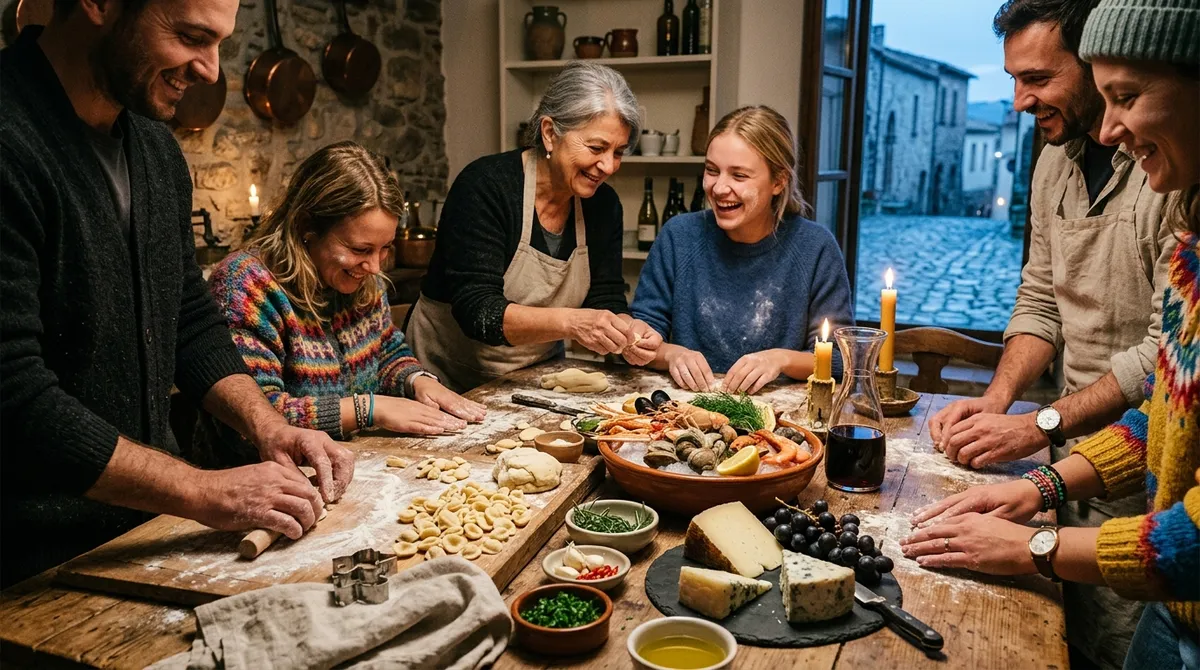
There's also the logistics argument. Coordinating market visits, tastings, cooking classes, and regional meals across multiple stops is genuinely complex. Handing that planning to someone who does it professionally frees you to focus on what you came for: the food, the people, and what both reveal about the place.
The most memorable meals you'll ever eat won't be in the fanciest restaurants. They'll be the ones where you understood exactly where the food came from and who made it — and that kind of understanding is what these trips are built to deliver.