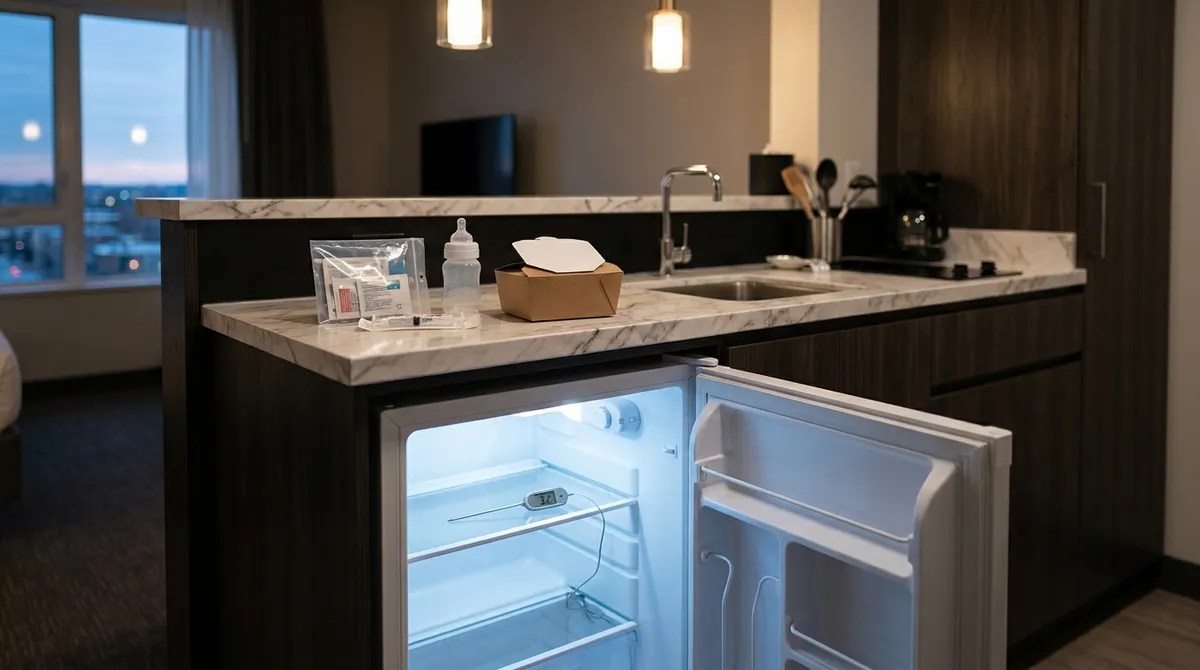
The Hidden Hotel Room Hazard
Travelers relying on hotel mini fridges for storing leftovers, medications, or breast milk may be unknowingly putting their health at risk. According to experts, many hotel "mini fridges" are actually beverage coolers that only cool to 50–60°F, well above the food-safe temperature of 40°F required to prevent bacterial growth.
This temperature difference creates what experts call the "temperature danger zone," where harmful bacteria can multiply rapidly in perishable items. With travel booming post-pandemic and more people storing food and medications in hotel rooms, this safety issue has become increasingly relevant for families and health-conscious travelers.
How to Spot a Beverage Cooler vs. Real Refrigerator
Experts recommend using the "glass-front trick" to identify whether your hotel unit is a true refrigerator or just a beverage cooler. Look for these key differences:
- Compressor check: True refrigerators have compressors that cycle on and off, while beverage coolers typically run continuously
- Temperature range: Beverage coolers are designed to chill drinks to 50-60°F, not preserve perishable food
- Construction: Many beverage coolers have glass fronts and are built for display rather than food storage
Understanding the Food Safety Risk
The "two-hour rule" applies even in hotel rooms, according to reports. Perishable foods left in the temperature danger zone (above 40°F) for more than two hours can develop dangerous bacterial growth. This makes the distinction between beverage coolers and true refrigerators critical for food safety.
Cooked leftovers, dairy products, and meat are particularly vulnerable when stored at inadequate temperatures, while certain shelf-stable items may be safer options for beverage cooler storage.
Safe Storage Strategies
Experts suggest different approaches depending on what type of cooling unit you encounter:
Safe for beverage coolers (50-60°F):
- Pickles and other acidic foods
- Beef jerky and dried meats
- Crackers and shelf-stable snacks
- Sealed beverages
Avoid in beverage coolers:
- Cooked leftovers from restaurants
- Dairy products like milk and cheese
- Fresh meat and poultry
- Prepared foods requiring refrigeration
Travel Preparation Tips
To avoid surprises, experts recommend creating a pre-booking checklist that includes asking hotels about their refrigeration units. Travelers can inquire about:
- Whether rooms have true refrigerators or beverage coolers
- Availability of upgrades to rooms with proper refrigeration
- Alternative storage options for medications or breast milk
Workarounds for Beverage Cooler Situations
For travelers stuck with a beverage cooler, experts suggest the ice-bag swap method as a DIY cooling solution. This involves using ice from hotel ice machines to create additional cooling for truly perishable items, though this should be considered a temporary measure rather than a long-term storage solution.
Medication Storage Concerns
The temperature issue extends beyond food safety to medication storage. Many prescription drugs and medical supplies require true refrigeration temperatures to remain effective. Travelers with insulin, certain antibiotics, or other temperature-sensitive medications should be particularly cautious about storage conditions.
Making Informed Decisions
As travel continues to increase, understanding the difference between beverage coolers and true refrigerators becomes essential for traveler safety. By learning to identify cooling unit types and adjusting storage strategies accordingly, travelers can better protect their health while enjoying their trips.
The key is preparation: knowing what to look for, asking the right questions when booking, and having backup plans for proper food and medication storage when true refrigeration isn't available.